There are two main types of users in Assetminder; system users and vendor management users. This procedure focuses on standard system users.
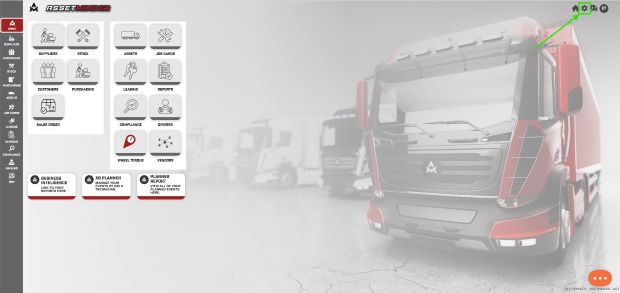
1. Click the Administrator Settings icon on the home screen.
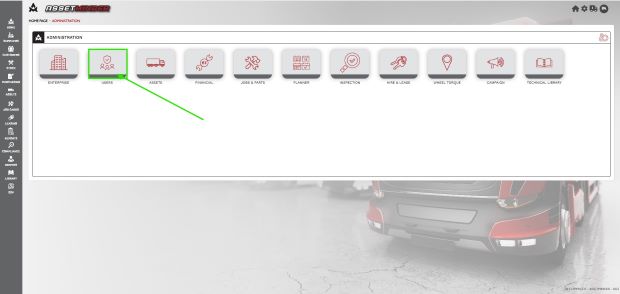
2. Select Users from the admin list.
3. Click New User to add the new user.
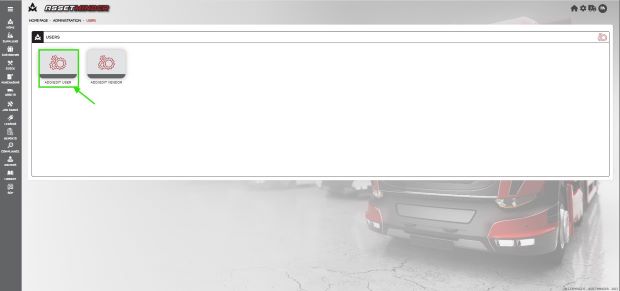
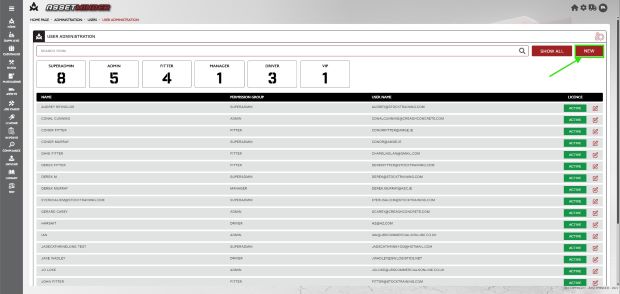
4. Click NEW to add the new user.
5. Add the new user details to the user record.
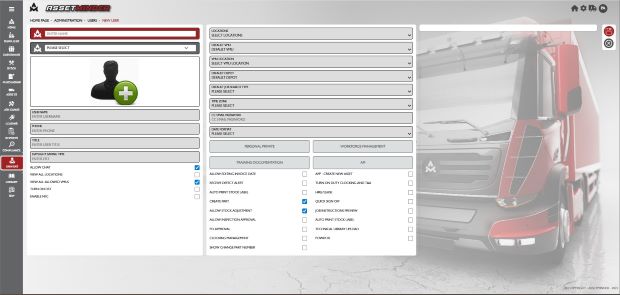
- Permissions group - This defines the user role in the organisation and determines how much of the system they have access too. To give more access to more features, grant the user a role with more access. The roles are set by Assetminder.
- User Name - The user name is used to log into Assetminder and serves as the email address for receiving password resets. If an email address is not available for a new user, the user name must still follow the standard email format (e.g., "johndoe@companyname.com") without any spaces.
- View all locations checkbox - The user sees the data by location as set in the Locations setting. Check this checkbox so the user can see the data across all sites if needed.
- View all allowed VMUS - The user sees the data by VMU as set in the VMU Location setting. Check this checkbox so the user can see the data across all sites if needed.
- Locations - That user can access the jobs and assets at that location.
- Default VMU - The user can select the default VMU
- VMU Location - The user can select which VMU locations they can access
- Default depot - home storage location for the user on each form.
- Default Job Search Type - This will display a default search type when searching jobs (e.g. Show all, Asset Registration number , Job number, etc )
- Timezone & Daylight savings - Inspections will appear in the set timezone.
- CC email Password - Allow to add additional email to retrieve password.
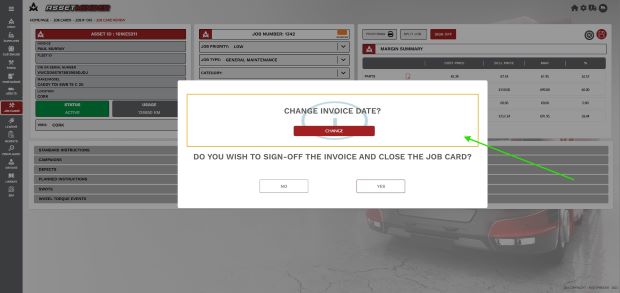
- Allow editing invoice date - before sending an invoice, the user is prompted to review the date and change if needed.
- Receive defect alerts - Check the checkbox so the user can receive defect notifications for their location.
- Auto Print Stock Label - Will automatically print stock labels when part is added to Job
- Create Part - Allows users to create a part in stock.
- Allow inspection approval - gives the user the permissions to sign off inspections in the inspection module
- PO approval - Allow user to sign off PO's
- Clocking Management - Gives permission to clock other users off job cards.
- Show Change Part Number - Access to update part number option on stock card.
- APP - Create new asset - Gives the user permissions to create new assets via mobile app.
- Turn on duty clocking - Turning this feature on enables duty clocking functionality on the mobile app.
- Allow Stock Adjustment - Allow user to manually update bin stock quantities.
- Job Instruction Preview - Automatic pop-up of job instructions each time a job card is opened.
- Power BI - Allow access to power Bi reports
- Cost per hour - Cost of that employee to do 1-hour work
- API Method Permission - Determines what API access this user profile has. This needs to be configured if the user needs access to anything connected via the API such as the maintenance planner.
- Default job card type - sets the default job type on the job card. (reactive, breakdown, condition-based maintenance, etc)
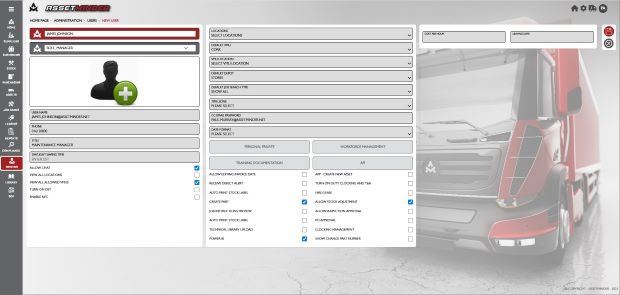
6. When all fields are filled in, the user record will look like the following:
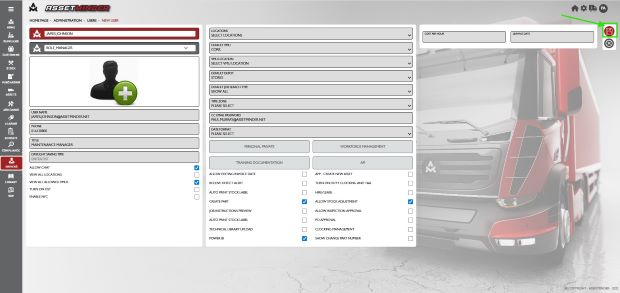
7. Click Save on the bottom right-hand side of the page when done.
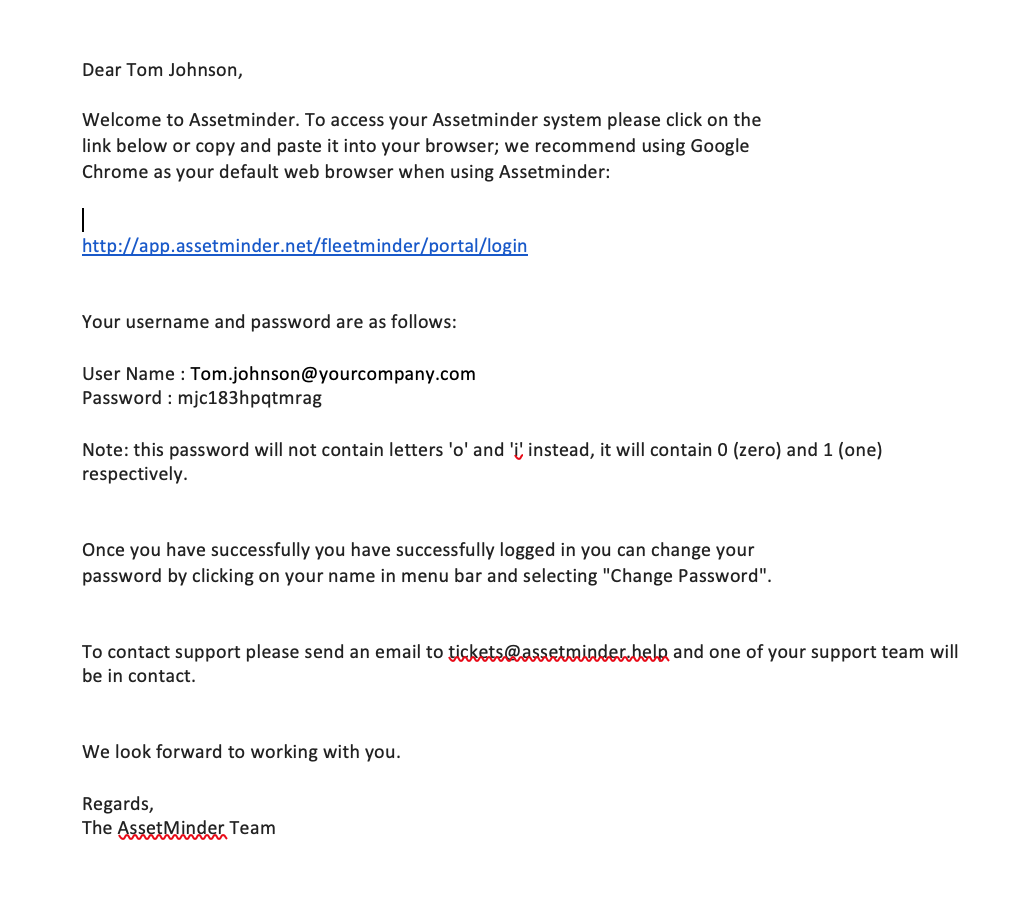
8. The new user is sent a welcome email with login details and a temporary password.
9. Repeat process for all additional users
Paul Murray
Comments